Sunday, March 13, 2011

Fort Tejon


Kern County August 16, 1993. The ’51 Cadillac Series 62 sedan purrs its way north through the grapevine and back on track for this column’s chronological timeline. With the old edition the state’s California Landmarks book and a pile of AAA maps and highlight markers it’s off to a gig in Roseberg, Oregon up Interstate 5 with a nose renewed for landmark finding. Though there were two other state landmarks nearby, this contributor remained a novice at finding them and time would pass before they were found in those pre GPS days. This state historic park is a great place to take a break and get off the hamster wheel that interstate 5. 


With a garrison of 250, Fort Tejon wasn’t a large fort by US standards yet 15 of its officers went on to being generals in the Civil War; eight for the union, and seven for the confederacy.


OAC photo


Plaque inscription: No. 129 Fort Tejon This military post was established by the United States Army on June 24, 1854 to suppress stock rustling and for the protection of Indians in the San Joaquin Valley. As regimental headquarters of the First Dragoons, Fort Tejon was an important military, social, and political center. Camels for transportation were introduced here in 1858. The fort was abandoned September 11, 1864.


OAC photo


There is another landmark and plaque at this site but it sits here without state or county recognition. Before being the president of the confederacy, Jefferson Davis was a congressman, senator, secretary of war and presidential advisor…and the vision of an improved road transcending the US and up the west coast. This was really more of concept than anything else but naming highways rather than numbering in the early 20th century was common practice and as the
Lincoln Highway
took shape the Daughters of the Confederacy and other groups wanted a Jefferson Davis highway for his route of interest. There are several landmarks along their route, which was to follow US 99 “from San Diego to San Francisco”. That’s interesting because 99 went to neither city. None the less, there’s one on the Arizona border, one in Horton Plaza in San Diego, one in Bakersfield, and one here at Fort Tejon   


OAC photo


Plaque inscription:
Camel Trail Terminus
Jefferson Davis, father of national highways, as Secretary of War 1853-57 sponsored the importation of 77 camels for transporting military supplies to the west coast. The camel trail survey ran from San Antonio, Texas, to Fort Tejon which marks the western terminus, part of the
Jefferson Davis Highway
.
The Army Camel Corps arrived at this fort in November, 1857, with Lt. Edward F. Beale in command.

Edward Beale’s name pops up in 19th century California history more than Mel Blanc’s voice in a Bugs Bunny cartoon. Speaking of film, Hollywood made a movie back in 1954 with Rod Cameron as Beale about the Camel Corps called ‘Southwest Passage’. From Internet Movie Database:
‘Edward Beale is in charge of finding a shorter trail across the American desert and to also test the practicality of using camels in the west in this 3-D western. (An actual test once conducted in the Big Bend area of Texas.) Clint MacDoanld, a bank robber one jump ahead of a posse, joins the caravan by posing as a doctor. His sweetheart, Lilly, also comes along and signs on. There is a whole lot of footage of the grueling trek across the desert, but it begins to move when mule-skinner Matt Carroll becomes aware of MacDonald's true profession and he wants the gold from the bank robbery. The Apaches have shied away from attacking the train, because of their fear of the camels, but a camel dies and the jig is up as they lose their fear and here they come.’
- Bugs, in ‘Jack-Wabbit and the Beanstalk’ was perhaps a more historically accurate venture.


Location: Fort Tejon State Historic Park, on Lebec Rd, 2.8 mi N of Lebec.
Google maps: 34.874846,-118.893254


Friday, March 11, 2011

Point Loma Lighthouse


Photo: August 15,1992


Maybe it was the fog that moved the lighthouse. Logic would have that a high point guarding a bay would a da kine spot for a beacon but the ‘new’ lighthouse that replaced this one in 1892 was put down by the water for the big lens to cut through the soup. But you’ll never see a swinging wooden seafood restaurant sign with a carved lighthouse hiding at the bottom of a bluff, there’s no majesty in that, besides, gentlemen shouldn’t be sailing about after dark in the first place.


Grandfather’s older brother John L. Bacon was mayor of San Diego during most of the 1920’s and under his watch brought in the zoo, the Mira Mar base, MCRD, and on the side, began resurrecting the old lighthouse. It was later tidied up and the road paved in the mid ‘30’s by the feds.


OAC photos c. 1928

It is said that the ghost of lighthouse keeper Robert Israel still roams its confines trying to keep the light. You got your heavy footsteps around the kitchen and living room, low moans from the south bedroom, a cold spot at the foot of the staircase, and an occasional passing cold breeze when climbing the steps. Good ghost fodder and enough to draw ghost hunters. Who knows? Capt. Israel was the only lightkeeper at Point Loma.  


1935 Photo


Plaque inscription: NO. 51 OLD POINT LOMA LIGHTHOUSE - This lighthouse, built in 1854, was one of the first eight lighthouses on the Pacific Coast. It continued in use until 1891, when the new Pelican Point Lighthouse began operating. The Point Loma Lighthouse became the site of the Cabrillo National Monument in 1913. During World War II, the Navy used it as a signal tower. Today the lighthouse remains the central feature of the Point Loma Preserve.
Location: Cabrillo National Monument, Point Loma, San Diego, San Diego County
Google maps: 32.671979,-117.240831

Thursday, March 10, 2011

Cabrillo Landing Site


August 15, 1992
With all the war, inquisition, famine, and disease going on back in the home turf, 1542 was a good time to be cruising the coast of California. After claiming California for Spain in June, Cabrillo floated into San Diego in September, and Catalina in October.
From the landmark’s number of 56, it’s pretty easy to figure out this site was obviously important to the state’s history. Because Cabrillo’s landing site is on the submarine base on Point Loma, it’s hard to get to and public access is allowed only during the annual Cabrillo Festival. So generally the answer is “no” when trying to get on the base to check the actual landmark and plaque but depending on what they’re up to, arrangements can be made.


1960 OAC photo from Cabrillo Monument looking to Ballast Point


Here’s a shot off the internet showing Cabrillo’s landing, and it appears from the background that he got to Ballast Point on the USS Midway.  


The date this landmark was visited by this contributor could more aptly be put as 1993 or 2004 but really, who cares? Though photos were taken of the landmark on the last visit they seem to have drifted away, besides, the primary reason for the journey was to hang out with the Navy’s dolphins. This shot is yours truly explaining to one of them that she’s had enough fish for the morning.


One option to avoid rejection at the sub base guard gate is to ignore the site and instead pay the fee and go the the Cabrillo National Monument where a Charlton Heston look alike statue sits atop the tip of Point Loma. Besides, this trip has to be done anyway in order to see the next landmark, the Old Point Loma Lighthouse.    


Plaque inscription: NO. 56 CABRILLO LANDING SITE - Seeking the mythical Strait of Anián (the Northwest Passage) for Spain, on September 28, 1542, Iberian navigator Juan Rodríguez Cabrillo brought his three ships to Ballast Point, the first European landing on the coast of Alta California.
Location: Base of Ballast Point, S end of
Rosecrans St
, where historic markers are on a half circle, U.S. Naval Submarine Base, San Diego, San Diego County
Google maps: 32.683633,-117.236738

Tuesday, March 8, 2011

Fort Rosecrans National Cemetary


VA photo

This seems to be the first US military cemetery in California, and because of that it thus merits state landmark status. Standing here on the green rolling hills overlooking both the bay and the Pacific, the Richard Rogers score from Victory at Sea naturally plays in one’s head, the question is asked, do the dead need such a view? Probably not, and as a pragmatic ex-marine, a nice flat secure spot further inland and out of mist like Kimball Park in National City would do just fine for a national cemetery…and justify the town name at the same time. Still, those who have passed and are interned here are proving to be better caretakers in preserving the pristine beauty of this site for living who wish to visit.


Steve Paul Johnson photos


The main purpose of a fort here was the installation of artillery to defend San Diego Bay against intruders, and they’ve been doing it since the Spanish plopped down smooth bore cannons at the tip of Ballast Point in 1797. Over the years they’ve placed cannons, mortars, howitzers, and naval guns at various locations, with the zenith being a couple of 16 inch long range guns during WWII….hopefully aimed seaward. In 1947 they pulled all the guns out, leaving the bay defenseless to invading flotillas all these ensuing years. This opens the obvious scenario of those pesky northern California secessionists firing up the ghost fleet of Suisen Bay, deactivating all the computing and electronic gizmos they invented up there, and taking the southern harbors by conventional means. The navy seals in their rubber rafts would be no match to the USS Iowa sailing in the bay with pillaging San Franciscans, commandeering Hotel Coronado and regrouping for a land assault to the airport with the eventual goal of Sea World in their sights.        


Visited - August 15, 1992
Plaque inscription: NO. 55  FORT ROSECRANS NATIONAL CEMETERY - A burial ground before 1847, this graveyard became an Army post cemetery in the 1860s. It is the final resting place for most who fell at San Pasqual in 1846, and for the USS Bennington victims of 1905. It became Fort Rosecrans National Cemetery in 1934 and was placed under the Veterans Administration National Cemetery System in 1973. Over 50,000 who served the U.S. honorably in war and peace lie here.
Location: Cabrillo Memorial Dr Point Loma, San Diego, San Diego County
Google maps: 32.688780,-117.244956

Monday, March 7, 2011

La Brea Tar Pits


Oil usually floats on water while tar will lurk below. Now imagine yourself as a Columbian mammoth out for stroll around Los Angeles on a typical zero degree afternoon during the last ice age when you come across inviting warm pools of water that lure you in with the promise of simultaneous bath and drink. You don’t even bother to tell the wife and kids. Suddenly, like a Bugsy Siegel snitch, you’re wearing cement shoes and headed to a Davy’s locker of goo and preservation, later to be excavated and put on display at the George C. Page museum in Hancock Park…..the Ritz of the Pits. And there you are, just another oversized tinsel town figure with a tragic end and afterlife fame.


USC digital achive photos (cir. 1927-1932)


Off to the pits on August 16, 1989 for no particular reason in an era resting on the eve of sweeping technology to come, when we carried a pager (if anything) instead of a cell phone and a call in meant combing the streets to find a phone booth to pair up with your roll of quarters. Though we were mired in pre tech tar, we weren’t all that accountable for street time and the dog could therefore still eat homework. The dow jumps to nearly 2700.


Local plaque and a national natural landmark

Plaque inscription: NO. 170 HANCOCK PARK LA BREA - The bones of thousands of prehistoric animals that had been entrapped during the Ice Age in pools of tar that bubbled from beneath the ground were exhumed from this site. First historic reference to the pools, part of the 1840 Rancho La Brea land grant, was recorded by Gaspar de Portolá in 1769 - first scientific excavations were made by the University of California in 1906. The site was presented to the County of Los Angeles in 1916 by Captain G. Allan Hancock to be developed as a scientific monument.
Location: Hancock Park,
5801 Wilshire Blvd
between Ogden and Curson Sts, Los Angeles, LA County
Google maps: 34.063837,-118.356287

Saturday, March 5, 2011

Litto The Hubcap King


What’s not to like? A sunny, warm and secluded valley in Napa County, off the usual path, with refracted light dancing off infinite rows of the automotive world’s chrome expressions of dressing up the wheel, in a day now where aluminum is king. For the tin foil hat crowd this could quite possibly be the safest place on earth from aliens and black helicopters.

Thematic folk art that makes it to landmarks status are 939’s…..presently there are eight of them throughout the state providing home grown eclec-ticity for the curious.


The whole thing started back in the 1030’s with the practice many of us do of propping up a fallen hubcap at roadside’s edge so the motorist could better retrieve his adornment. Well, since the area roads were rough and potholed, providing ample material, and with a love of things flashy, Litto Demonte took things a step further.
The late Litto’s grandson Mike runs the 360 acre ranch these days and the policy of giving a rare hubcap to grateful collectors continues, with the hitch that you must bring 5 hubcaps to replace it…thus insuring a healthy brood.


June 14, 1982. Like a spinner off a ’56 Dodge Coronet yours truly quite literally rolled up to this place while winding up a day of wine country stops with a trip to the Pope Valley Winery. No better way to celebrate the day the Falklands war ended than with cabernet, camping, and hubcaps. 


Plaque inscription: NO. 939 TWENTIETH CENTURY FOLK ART ENVIRONMENTS(Thematic) -LITTO - This is one of California's exceptional Twentieth Century Folk Art Environments. Over a period of 30 years, Emanuele 'Litto' Damonte (1896-1985), with the help of his neighbors, collected more than 2,000 hubcaps. All around Hubcap Ranch are constructions and arrangements of hubcaps, bottles, and pulltops which proclaim that 'Litto, the Pope Valley Hubcap King,' was here.
Location:
6654 Pope Valley Rd
(P.M. 14.3), 2.1 mi NW of Pope Valley, Napa County
Google maps: 38.63635,-122.452948

Thursday, March 3, 2011

Bodie


“Good bye God, we’re going to Bodie”
“Good! By God, we’re going to Bodie”
The legendary quote of a little girl when told she was moving to the infamous town of western lore, and the town’s retort. Most likely the line was made up in the press.


USC digital archives photo


In retrospect, the decision in the late ‘70’s to move full time to the Eastern Sierras, play music and live the ski lifestyle, avoiding the ‘real’ music business was still a good one. It’s best to front load retirement. On the gig and in the nightly round of quotes and toasts was; “Ya know, 100 years ago Bodie had 10,000 people, a tile bar that doubled as a urinal, a cord of wood was as much as it is today, and cocaine for the horses was two dollars a pound.” This served as a launch into one of the songs about the substance. Following that and bringing it back home to the region was usually ‘Darcy Farrow,’ the much recorded Steve Gillette – Tom Campbell piece of tragic folklore of a girl’s death and lover’s suicide that was actually based on a not so threatening injury to Steve’s younger sister, Darcy, from a horse. Ah yes, and the night Steve’s dad, George the attorney, got the opportunity he’d waited years for. Yours truly was playing the tune for George at the Mammoth Lakes bar with a ski dude and bunny wedged in between at a two top next to the riser ‘stage’. Overheard from ski dude to ski bunny: “Yeah, that’s a true story…took place a hundred years ago…back when cocaine was…..” George had his moment and with the stagecraft of a Daniel Webster closing argument he lavished forth the facts of his son and daughter like snopes.com and nothing remained of ski dude but a bar bill and a bandana.  


Though it is best to leave the details of Bodie’s past fine historical points to those dedicated to the task, it can be generally stated that due to high altitude, extreme wind and cold, and barren terrain, that water and wood were fightin’ issues.  


God pulled out all the stops for the route along US 395 from Tom’s Place to Walker River and one could surmise that when extra material was needed for architectural splendor, it was quarried from Bodie and its immediate vicinity.


Photo from the ‘secret’ campground near Bodie to the west. The clue is Bogey and Bacall in this area.

Photos were taken July 15, 1981 with a Canon AE-1


Plaque inscription: NO. 341 BODIE - Gold was discovered here in 1859 by Wm. S. Bodey, after whom the town was named, and the town became the most thriving metropolis of the Mono country. Bodie's mines produced gold valued at more than 100 million dollars. Today a state park, Bodie is one of the best known of the west's 'ghost towns.'
Location: Bodie State Historic Park, on
State Hwy
270, 12.8 mi E of
State Hwy
395 (P.M. 69.8), 19.8 mi SE of Bridgeport, Mono County
Google maps: 38.213637,-119.015493


Tuesday, March 1, 2011

Morro Rock


First impressions could lead one to think Morro Rock is a five hundred foot high monument to bird poop but there’s much more. Named by Cabrillo back in the 1540’s tin hat days, Morro Rock is home to the endangered nesting peregrine falcons, and considered the Gibraltar of the Pacific to mariners, it was also a site for ancient first nation rituals until becoming a state landmark in 1968 when they said you can’t climb on the rock anymore. Nearly decimated by ddt, the peregrines are doing much better now. The Chumash and Salinan people have permission to climb the rock annually for separate ceremonial purposes.  

From a research paper by Angela Howard Dillon comes this account of the Salinan legend: “Hawk (or falcon, depending on the version you favor) and Raven decided to seek out and destroy a terrible two-headed snake called Taliyekatapelta.  They found the serpent somewhere east of Morro Bay, but it began chasing them.  Hawk and Raven flew to Morro Rock, where Raven’s powers came from, but the snake came swiftly after them and, with its huge body, encircled Morro Rock and began to wind its way upward.  As Taliyekatapelta approached, Hawk and Raven took out their knives and began to hack away at it, until it fell into pieces”


Dennis Laird photos


Mid summer of 1979 and while on vacation from gigs at home in Mammoth Lakes, arrangements were made for a stint in San Luis Obispo, so, using the Tioga Pass shortcut through Yosemite, it was off to Slo-town and a stay the Ritz Motel for fifty clams a week. Notes said ‘the Ritz is the pitz’. One foggy day outing found me there on the coast face to face with landmark and rock in blissful innocence of the landmark obsession to follow in later years.

Plaque inscription: NO. 821 MORRO ROCK - An important mariner's navigational landfall for over three hundred years, Morro Reef was chronicled in the diaries of Portolá, Fr. Crespí, and Costanso in 1769, when they camped near this area on their trek to find Monterey. Sometimes called the 'Gibraltar of the Pacific,' it is the last in the famous chain of nine peaks which start in the city of San Luis Obispo.
Location: Located in city park, foot of Morro Rock, on Embarcadero Rd, 0.4 mi NW of Morro Bay, San Luis Obispo County
Google maps: 35.370577,-120.865051

Tuesday, February 22, 2011

Old Mazeland School


Note: Like the preceding three dispatches, the Mazeland School was seen before ‘officially’ setting out to see all of California’s state landmarks in 1993, so it’s off to Orange County to put another duck in the row.


The Huffy makes all the difference. It’s August 1957 and the Schwinn’s replacement is a 3-speed wonder of bicycle engineering that opens up the region like never before for a 10 year old. South to the beach, northwest to Lions Drag Strip, or northeast to Knotts Berry Farm….all in handy reach on lightly traveled roads of the day. We’re headed to Knott’s out
Carson Street
which becomes Lincoln when we hit Orange County, then up Western to the west side of Knott’s Berry Farm and park with the other bikes and walk on to Ghost Town.


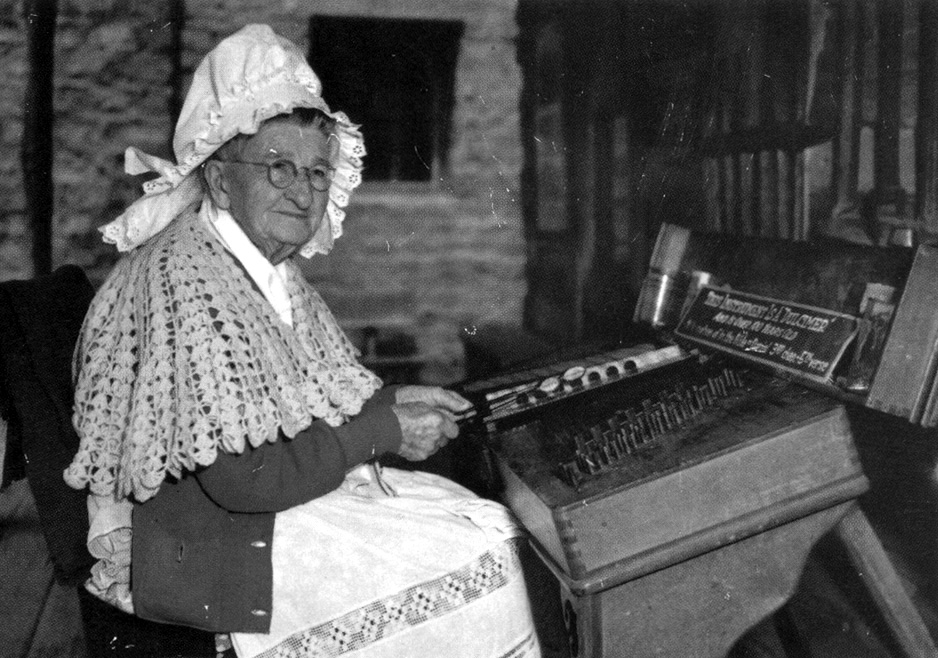
The good stuff required money yet there was still plenty to do, but all that comes to mind now was to watch Aunt Nellie play the hammer dulcimer or talk to the guy in the jail. Available funds were spent on sarsaparilla in the saloon, the only known source of the real thing. The famous chicken dinner was $2.25 then and though that doesn’t seem like much today, a 20 cent hamburger from a stand along the way to Knott’s was the better deal for lawn mowin’ money.


We’re supposed to have free access to all of California’s state landmarks, that’s how it’s written up. However, over time the physical world around these 1100 or so sites evolve and sometimes we’re simply shut out, legally or not, and it is especially frustrating when an actual landmark exists. Mazeland School sits in a remote corner of the park as a well maintained pantomime caricature of its old self, accessed through the main entrance…meaning ‘ya gots ta pay’. A way around entrance fees that block what is supposed to be free access to state landmarks that works in most instances is to recite Office of Historic Preservation code stating the fact and you’re only here to view the landmark and will be off property in fifteen minutes. It helps to carry camera gear, hand held gps, a clipboard, and a laptop…enough stuff to look official and that you couldn’t possibly enjoy yourself. If must travel light then make sure the one thing you carry is a clipboard, and on it should be photos and information about the landmark you intend to see. Though these methods are nearly fail safe and have saved hundreds of dollars amortized over 900 landmarks with state and national parks and museums, etc., a theme park is a different animal and you’re going against the ‘A’ team in security terms. Good luck.


Plaque inscription: NO. 729 OLD MAIZELAND SCHOOL (RIVERA SCHOOL) - Constructed in 1868, this was the first school in the Rivera District. It was previously located on
Shugg Lane
, now
Slauson Avenue
.
Location: Knott's Berry Farm,
8039 Beach Blvd, Buena Park
, Orange County
Google maps: 33.843375-118.000614


Sunday, February 13, 2011

S.S. Catalina


This boat had class, and yet a regular guy from Rialto could shed a nametag uniform for a sport coat and share the ambiance with a Bel Air millionaire at the fantail bar as the bow cracked the summer morning ocean mist to the halo of crystal blue sky and waters of Avalon Bay. It’s July, 1955 and we’re in the wheelhouse of the S.S. Catalina’s heyday. 


Toss some coins off the starboard side to the diving island kids, as the refrain from ‘Avalon’ plays in your head stepping on to steamer pier. Bunny hop the night away at the casino with an actual orchestra, hit the glass bottom boats, or off to the interior in search of buffalo in the round back tour bus, go to the bird park, or simply hoist a few at the Marlin. At three in the afternoon (4 for daylight savings) the S.S. Catalina’s earth shaking whistle calls everyone back for the return to the mainland. Though you could cross by flying boat, DC-3, or sail or powerboat, the Great White Steamer was built for the task of going to Avalon and nothing did it better.


Sadly, due to cost of operation and the need for more frequent daily crossings, the S.S. Catalina was taken out of service in 1975 and bought by Hymie Singer for $70,000 as a Valentine gift for his wife. Hymie bit off more than he could chew and the once elegant vessel fell to progressively worsening situations and left to rot in Ensenada Bay. It has since been demolished. Though the present day Catalina Express catamarans are marvels of efficiency and Commodore Class includes trail mix, cookie, and a drink, the brass, teak, and leather is missed…yeah, that boat had class.


Before ‘officially’ setting out to see all of California’s state landmarks in 1993, there were a dozen or so seen by chance or choice in earlier years. The S.S. Catalina is the third in this series of dispatches.   

If there was a plaque the inscription would read: Launched in 1924, built by Santa Catalina Island owner and chewing gum Magnate William Wrigley. She was used to transport passengers from Los Angeles to the island. During her working life she carried over 2.4 million passengers to and from Avalon Bay on Catalina Island.  Retired in 1975 and place on the National Register of Historic Places in 1976. CATALINA is registered as California State Historical Landmark No. 894 and City of Los Angeles Cultural Monument No. 213.

Location: Google maps: 33.344683 - 118.3264 for former site of ‘steamer pier’ in Avalon Bay.  Original location: Port of Los Angeles, Catalina Terminal, Berth 96.


The family has been trekking to Catalina for nearly 100 years and here are a few early shots from 1918. The ship at the steamer pier is unknown but possibly ‘The Hermosa’. When Wm. Wrigley bought the island he also bought the ‘Virginia’ or USS Blue Ridge and renamed it ‘The Avalon’, and later added the S.S. Catalina in 1924.


For the 1958 Four Preps hit ‘26 Miles’ the story was that Mr. Belland from the group was putting a song about Catalina together on a LA South Bay beach and asked someone walking by how far away the island was, "I dunno, about 26 miles".


For this writer, the island gets many visits in song; ‘Catalina’, ‘Day Old’, ‘S.S. Catalina’, ‘The Golf Cart Song’, ‘Charlotte’, ‘Great Avalon Fat Dog Contest’, ‘Tuna Club’, and ‘Avalon, I’m Coming Home’ are all about the experience.

Here’s a YouTube link for a video of the song:
http://www.youtube.com/watch?v=dbqz71zaSvg


S.S. CATALINA                   

Up the ramp, onboard the ship, leave the world behind

To a topside bench painted blue, out on the starboard side

Hands to your ears for the whistle blast, soon you’re on your way
Out to sea at 16 knots, could there be a better day?

Porpoises swim to the side as if to say hello
There’s flying fish and stranger things, they put on quite a show
The band plays by the dance floor, with drinks at the fantail bar
There’s lovers, friends and wide eyed kids and occasional movie stars

(Chorus) On the SS Catalina there’s so much to be seen
Come take a ride, leave cares aside on the ocean so serene
To the island of romance, won’t you come along?
On the SS Catalina, the pride of Avalon

William Wrigley had her built in 1924
2000 strong she’ll carry, to the Catalina shore
Past the grand Casino to the steamer pier on time
Over 20 million passengers she carried in her prime

Alas, her time has come and gone she sails the sea no more
But legend says there is a way, if you go to the Avalon shore
And listen close you’ll hear the ghost of her whistle everyday
At three o’clock she calls goodbye and sails on her way